
9 Trusted PWA Development Companies in the USA for 2026

Progressive Web Apps (PWAs) have evolved from a promising concept to a business necessity. Companies like Twitter, Starbucks, and Alibaba have already demonstrated how PWAs can dramatically improve user engagement, reduce bounce rates, and drive revenue growth—all while cutting development costs.
As mobile usage continues to dominate digital interactions, businesses face a critical challenge: how to deliver app-like experiences without the friction of app store downloads, platform-specific development, and massive budgets. This is precisely where Progressive Web Apps shine.
For businesses seeking to build or upgrade their digital presence in 2026, choosing the right PWA development company is a decision that can make or break your digital strategy. The wrong partner can lead to wasted budgets, delayed launches, and subpar user experiences. The right one can transform your customer engagement and accelerate your growth trajectory.
This comprehensive guide examines the top 9 PWA development companies in the USA, providing you with the insights needed to make an informed decision for your business.
Overview
Progressive Web Apps represent a fundamental shift in how businesses approach web and mobile development. By combining the reach of the web with the functionality of native apps, PWAs eliminate the traditional barriers between these platforms.
The PWA market has experienced remarkable growth. According to recent industry data, the global PWA market size is projected to reach $10.77 billion by 2027, growing at a CAGR of 31.9% from 2020. This explosive growth reflects the technology’s proven ability to deliver tangible business results.
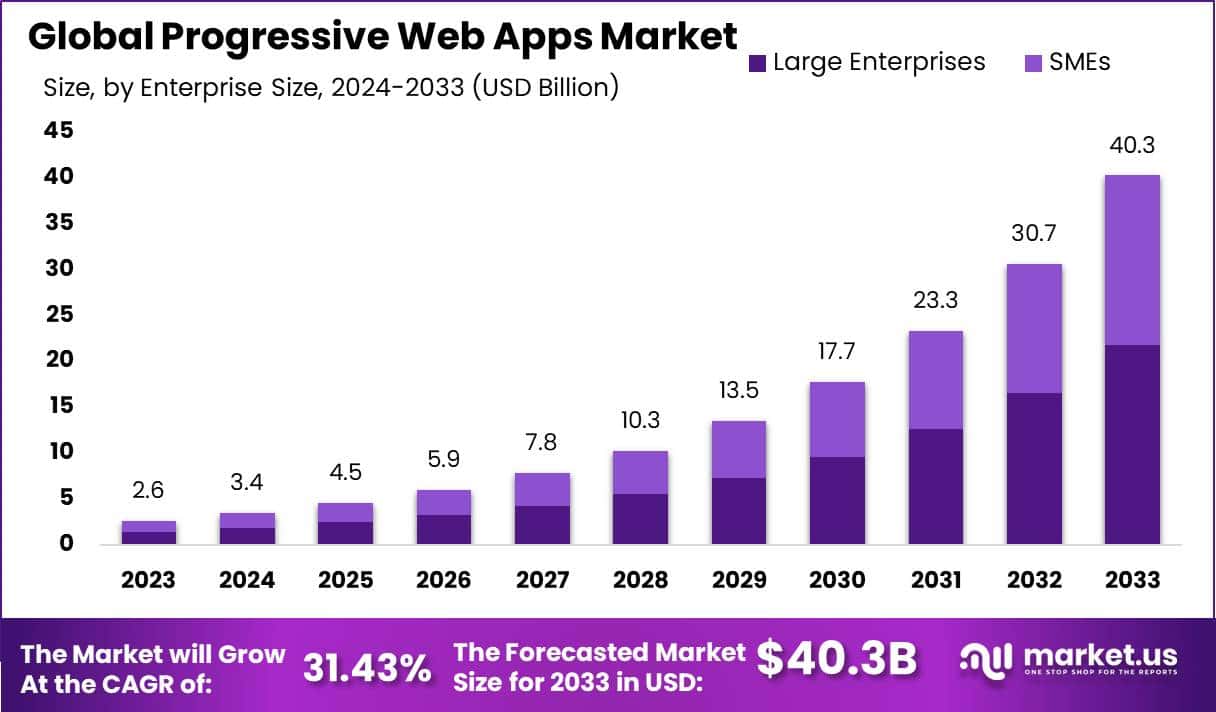
Companies implementing PWAs have reported impressive metrics: up to 68% increase in mobile traffic, 52% average conversion increase, and 78% reduction in page load times. These aren’t just incremental improvements—they represent transformative changes in how businesses connect with customers.
In the United States, the adoption of PWA technology has been particularly strong among e-commerce, media, entertainment, and SaaS companies. As businesses increasingly recognize that mobile-first isn’t enough—they need mobile-best—PWA development has become a strategic priority.
Market Trend in USA
The American market for PWA development is experiencing unprecedented momentum in 2026. Several converging factors are driving this growth and reshaping how businesses approach digital development.
Mobile Commerce Dominance
Mobile commerce now accounts for over 43% of total e-commerce sales in the United States, with projections suggesting this will exceed 50% by 2027. This shift has forced businesses to reconsider their mobile strategies. Traditional responsive websites often fall short of user expectations, while native app development remains prohibitively expensive for many companies.
PWAs bridge this gap perfectly. Companies implementing PWAs have seen mobile conversion rates increase by an average of 36%, with some reporting improvements exceeding 100%.
5G Network Expansion
The widespread rollout of 5G networks across the USA has created ideal conditions for PWA adoption. With faster connectivity and lower latency, PWAs can deliver near-instantaneous loading times and seamless offline functionality. This infrastructure improvement has eliminated one of the historical concerns about web-based applications.
App Fatigue and User Behavior Shifts
American consumers are experiencing app fatigue. The average smartphone user has 80 apps installed but regularly uses only 9 of them. Meanwhile, 25% of downloaded apps are never opened after installation. This creates a significant challenge for businesses trying to reach customers through traditional app stores.
PWAs eliminate download friction entirely. Users can access full functionality immediately through their browser, with the option to add the app to their home screen with a single tap. This dramatically reduces the barrier to engagement.
Cost Optimization Pressure
Economic headwinds have intensified pressure on businesses to optimize technology spending. Developing and maintaining separate iOS and Android native apps requires substantial ongoing investment. A single PWA development company can deliver a unified solution that works across all platforms, typically at 60-70% lower cost than native app development.
Privacy and Data Regulations
Increasing focus on data privacy, particularly with regulations like CCPA in California, has made businesses more cautious about app permissions and data collection. PWAs operate within the browser’s security sandbox, providing robust privacy protections while still delivering rich functionality.
Also Read: Top 10 Benefits of Hiring a Professional Web Development Company
What Is a PWA Development Company?
A PWA development company specializes in creating Progressive Web Applications—sophisticated web-based software that delivers app-like experiences through modern web browsers. These companies combine expertise in web technologies, mobile optimization, and user experience design to build applications that blur the line between websites and native apps.

Core Competencies
PWA development companies master three fundamental web technologies that power Progressive Web Apps:
Service Workers enable offline functionality and background synchronization, allowing apps to work without internet connectivity and update content in the background.
Web App Manifests provide the metadata that enables users to install PWAs on their devices and launch them from their home screen with a native app feel.
Application Shell Architecture creates instant loading experiences by separating core application infrastructure from dynamic content.
Beyond Basic Development
Leading PWA development companies in USA offer comprehensive services that extend far beyond coding. They provide strategic consultation to determine whether PWA is the right solution for specific business needs, conduct thorough competitive analysis, and design user experiences optimized for progressive enhancement.
These companies understand that PWA development isn’t simply about technology—it’s about solving business problems. They work to understand conversion funnels, user behavior patterns, and business objectives before writing a single line of code.
Industry-Specific Knowledge
The best PWA development companies bring deep vertical expertise. E-commerce PWAs require different optimization strategies than media streaming apps or enterprise SaaS platforms. Specialized developers understand the unique performance requirements, user behavior patterns, and regulatory considerations across different industries.
Technical Excellence
Expert PWA developers stay current with evolving web standards and browser capabilities. They optimize for Core Web Vitals—Google’s metrics for user experience quality—ensuring PWAs meet the strict performance criteria that influence search rankings. They implement advanced features like push notifications, background sync, and payment integration while maintaining cross-browser compatibility.
Also Read: How Rapid Web App Development Works: Top Tools, Steps, and Best Practices
Industries Where PWAs Deliver the Most Value
While Progressive Web Apps can benefit virtually any business with a digital presence, certain industries experience disproportionately high returns from PWA implementation. Understanding these high-impact sectors helps businesses benchmark their potential ROI.
E-commerce and Retail
E-commerce companies consistently report the most dramatic results from PWA adoption. The combination of fast loading, offline browsing, and streamlined checkout drives measurable conversion improvements.

Online retailers using PWAs have seen session durations increase by 50-80%, cart abandonment decrease by up to 33%, and overall revenue per visitor climb by 20-40%. The ability to browse products offline and receive push notifications about abandoned carts or sales directly addresses the biggest pain points in mobile commerce.
Major retailers have proven the model: AliExpress increased conversion rates by 104% and time spent per session by 74% after launching their PWA. Lancôme built a PWA that recovered 84% of sessions lost to poor connectivity.
Media and Publishing
News organizations and content publishers find PWAs particularly valuable for engagement and ad revenue. Fast-loading articles, offline reading capability, and push notifications for breaking news create compelling user experiences that traditional mobile websites struggle to match.
The Washington Post’s PWA loads in under one second on average, resulting in a 5x increase in engagement. Forbes’ PWA achieved 43% session increase and 100% engagement increase compared to their previous mobile experience.
Travel and Hospitality
Travel booking platforms benefit enormously from PWA capabilities. Users frequently research trips in environments with spotty connectivity—airports, trains, or while traveling abroad. Offline functionality ensures users can access itineraries, booking confirmations, and travel information regardless of network conditions.
MakeMyTrip’s PWA led to a 38% increase in conversion rate and a 160% increase in shopper sessions. Trivago saw 97% increase in clickouts to hotel offers after deploying their PWA.
Financial Services and Fintech
Banking, investment, and financial technology companies leverage PWAs to deliver secure, fast, and reliable experiences without the overhead of native app maintenance. The enhanced security model of PWAs, combined with instant updates and cross-platform consistency, makes them ideal for financial applications.

Progressive Web Apps meet strict security requirements while providing the real-time functionality users expect from financial applications.
Healthcare and Telemedicine
Healthcare providers use PWAs to improve patient engagement, appointment scheduling, and prescription management. The ability to send push notifications for appointment reminders, medication schedules, and health updates drives better patient outcomes.
The privacy-focused nature of PWAs aligns well with HIPAA compliance requirements, while offline functionality ensures critical health information remains accessible.
SaaS and Enterprise Software
Software-as-a-Service companies recognize that PWAs reduce friction in their sales funnel. Potential customers can immediately experience the product without downloading anything, significantly improving trial conversion rates.
Enterprise applications benefit from consistent experiences across devices, simplified deployment (no app store approval needed), and the ability to update all users instantly.
Key Services Offered by PWA Development Companies
Professional PWA development companies provide comprehensive services that span the entire lifecycle of Progressive Web App creation, deployment, and optimization. Understanding these services helps businesses evaluate potential partners and ensure they receive complete solutions.
Strategic Consultation and Planning
Before any development begins, expert PWA companies conduct thorough discovery sessions to understand business objectives, target audiences, and technical requirements. They perform competitive analysis to identify opportunities for differentiation and conduct technical audits of existing digital properties.
This phase includes feasibility assessment, ROI projections, and technology stack recommendations. Companies determine whether PWA is the optimal solution or if hybrid approaches might better serve specific needs.
Custom PWA Design and Development
Core development services include building responsive, mobile-first interfaces optimized for progressive enhancement. Developers implement service workers for offline functionality, create app shells for instant loading, and integrate web app manifests for installability.
Advanced features include push notification systems, background synchronization, payment integration, geolocation services, and camera/sensor access. All development follows accessibility standards and ensures cross-browser compatibility.
Performance Optimization
Performance is non-negotiable for PWAs. Development companies optimize for Core Web Vitals—Largest Contentful Paint (LCP), First Input Delay (FID), and Cumulative Layout Shift (CLS)—which directly impact search rankings and user experience.
This includes image optimization, code splitting, lazy loading, caching strategies, and CDN configuration. The goal is achieving sub-second load times on 3G connections and near-instantaneous loads on faster networks.
Migration and Modernization
Many businesses need to transform existing websites or native apps into PWAs. Development companies provide migration services that preserve existing functionality while adding progressive capabilities.
This includes data migration, feature parity analysis, and phased rollout strategies that minimize disruption to existing users.
Testing and Quality Assurance
Comprehensive testing ensures PWAs work flawlessly across devices, browsers, network conditions, and operating systems. This includes functional testing, performance testing, security audits, accessibility compliance verification, and real-world user testing.
Companies use automated testing frameworks combined with manual QA to catch issues before they impact users.
Deployment and App Store Submission
While PWAs bypass traditional app stores, many businesses choose to also distribute through them for maximum reach. Development companies handle submission to Google Play Store and Microsoft Store, ensuring compliance with platform requirements.
They configure proper hosting environments, implement SSL certificates, set up CDNs, and establish deployment pipelines for continuous updates.
Maintenance and Support
Ongoing maintenance keeps PWAs performing optimally as browsers evolve and business needs change. Services include security patching, feature enhancement, performance monitoring, bug fixes, and compatibility updates.
Leading companies provide SLA-backed support with defined response times for critical issues.
Analytics and Optimization
Data-driven improvement requires robust analytics implementation. Companies integrate analytics tools, set up conversion tracking, create custom dashboards, and provide regular performance reports with actionable recommendations.
Training and Knowledge Transfer
To empower internal teams, PWA companies offer training on content management, basic troubleshooting, analytics interpretation, and best practices for maintaining optimal performance.
How We Evaluated the Best PWA Development Companies
Selecting the top PWA development companies in USA required rigorous evaluation across multiple dimensions. Our methodology prioritizes factors that directly impact project success and long-term business value.
Technical Expertise and Innovation
We assessed each company’s demonstrated mastery of core PWA technologies including service workers, web app manifests, and modern JavaScript frameworks. Companies were evaluated on their contribution to open-source projects, speaking engagements at industry conferences, and published thought leadership.
We also examined their ability to implement cutting-edge features like Web Assembly, Web Bluetooth, Web NFC, and other emerging capabilities that extend PWA functionality.
Portfolio Quality and Diversity
Real-world results speak louder than promises. We analyzed each company’s portfolio for complexity, innovation, and measurable business impact. We looked for diversity across industries, demonstrating adaptability to different business requirements.
Quantifiable results such as conversion rate improvements, performance metrics, and user engagement increases provided concrete evidence of capability.
Client Testimonials and References
We reviewed third-party review platforms including Clutch, GoodFirms, and Google Reviews. We contacted former clients directly to verify satisfaction, communication quality, deadline adherence, and post-launch support.
Long-term client relationships indicated sustained value delivery beyond initial development.
Development Process and Methodology
We evaluated whether companies use agile methodologies, maintain transparent communication, and involve clients appropriately throughout development. The best companies balance flexibility with structured project management.

Clear documentation practices, code quality standards, and version control processes indicate professional operations.
Performance Track Record
We specifically examined the performance metrics of live PWAs these companies built. Using tools like Google Lighthouse, WebPageTest, and real-world testing, we verified that delivered projects meet performance standards.
Companies whose PWAs consistently score 90+ on Lighthouse audits and meet Core Web Vitals thresholds demonstrated superior optimization capabilities.
Security and Compliance Expertise
Given the importance of data protection, we evaluated each company’s security practices, compliance certifications, and experience with regulated industries. Knowledge of GDPR, CCPA, HIPAA, and PCI DSS requirements separated experienced firms from generalists.
Post-Launch Support
Development is only the beginning. We assessed the quality and responsiveness of ongoing support, maintenance offerings, and the company’s approach to long-term client relationships.
Value and Pricing Transparency
While cost shouldn’t be the sole factor, we evaluated whether pricing aligns with delivered value. Transparent pricing models, clear scope definitions, and absence of hidden fees indicate trustworthy partnerships.
Communication and Cultural Fit
Technical ability means little without effective communication. We considered responsiveness, clarity of explanations, willingness to educate clients, and compatibility with different organizational cultures.
Best 9 PWA Development Companies
Based on our comprehensive evaluation, these nine companies represent the premier PWA development companies operating in the United States in 2026. Each brings distinctive strengths while maintaining the fundamental excellence required for successful PWA implementation.
1. Crestexa
Crestexa stands out as a comprehensive digital innovation partner specializing in Progressive Web App development with a proven track record across multiple industries. Their approach combines strategic thinking with technical excellence, delivering PWAs that drive measurable business results.
Why Crestexa Excels
Crestexa’s methodology centers on understanding business objectives before proposing technical solutions. Their team conducts thorough competitive analysis and user research to ensure every PWA is optimized for target audiences and market positioning.
Their portfolio demonstrates versatility across e-commerce, healthcare, fintech, and SaaS applications. Each project showcases attention to performance optimization, with consistent Lighthouse scores exceeding 95 and load times under one second on standard connections.
Clients consistently praise Crestexa’s transparent communication, agile development process, and commitment to knowledge transfer. They don’t just build PWAs—they empower internal teams to understand and leverage the technology effectively.
Core Services
- Custom PWA design and development
- Legacy website and app migration to PWA
- E-commerce PWA optimization
- Enterprise application development
- Performance optimization and auditing
- Ongoing maintenance and support
Ideal For
Mid-sized to enterprise businesses seeking a strategic partner who balances innovation with practical business focus. Companies prioritizing long-term relationships over transactional development.
Learn more: https://www.crestexa.com/
2. Intellectsoft
Intellectsoft brings enterprise-grade development capabilities to Progressive Web App projects. With over a decade of experience serving Fortune 500 companies, they excel at complex, high-stakes implementations requiring robust architecture and scalability.
Their PWA solutions integrate seamlessly with existing enterprise systems, including ERP platforms, CRM software, and legacy databases. This integration expertise makes them particularly valuable for large organizations with complex technical environments.
Strengths
- Enterprise system integration
- Scalable architecture for high-traffic applications
- Strong security and compliance expertise
- Experience with regulated industries
Best Fit
Large enterprises and organizations with complex integration requirements, particularly in healthcare, finance, and logistics sectors.
3. Fingent
Fingent specializes in custom software development with a strong focus on emerging technologies including PWAs. Their consultative approach helps businesses navigate whether PWA is the right solution or if hybrid approaches might better serve their needs.
Their team excels at greenfield projects where businesses are starting from scratch and need comprehensive guidance on technology stack, architecture, and feature prioritization.
Strengths
- Strategic technology consulting
- Custom solution design
- Strong project management capabilities
- Cross-platform expertise
Best Fit
Businesses launching new digital products or undergoing major digital transformation initiatives.
4. Konstant Infosolutions
With a global presence and competitive pricing, Konstant Infosolutions delivers quality PWA development with excellent value propositions. They maintain development centers that enable around-the-clock progress while keeping costs accessible for mid-market companies.
Their portfolio spans consumer apps, business tools, and e-commerce platforms, demonstrating versatility across use cases.
Strengths
- Cost-effective development
- Fast turnaround times
- Diverse industry experience
- Flexible engagement models
Best Fit
Growing companies seeking quality development at competitive price points, particularly startups and mid-market businesses.
5. OpenXcell
OpenXcell has built a reputation for innovative PWA implementations that push the boundaries of what web technologies can accomplish. They stay at the forefront of emerging web APIs and capabilities, implementing features many companies consider experimental.
Their developers actively contribute to web standards discussions and open-source projects, ensuring deep expertise in cutting-edge capabilities.
Strengths
- Advanced feature implementation
- Innovation and R&D focus
- Strong technical architecture
- Progressive enhancement expertise
Best Fit
Companies seeking competitive differentiation through innovative features and bleeding-edge capabilities.
6. Surf
Surf brings design-forward thinking to PWA development, creating visually stunning applications that don’t compromise on performance. Their multidisciplinary teams include UX researchers, visual designers, and frontend specialists who collaborate throughout development.
The result is PWAs that users love to engage with, driving higher retention and conversion rates through exceptional user experience.
Strengths
- Superior UI/UX design
- User research and testing
- Brand-aligned design systems
- Animation and micro-interaction expertise
Best Fit
Consumer-facing businesses where brand experience and visual appeal significantly impact success, including retail, lifestyle, and media companies.
7. Zco Corporation
Zco Corporation’s 30+ year history in software development provides deep technical expertise and process maturity. They approach PWA projects with the rigor of enterprise software development, ensuring robust testing, documentation, and quality assurance.
Their experience spans mobile, web, and emerging platforms, providing valuable cross-platform perspective that enriches PWA implementations.
Strengths
- Mature development processes
- Comprehensive testing and QA
- Strong project documentation
- Long-term stability and support
Best Fit
Organizations prioritizing reliability, thorough documentation, and established processes over cutting-edge experimentation.
8. WillowTree
WillowTree combines creative agency sensibilities with technical development prowess. Their collaborative workshops help clarify product vision, define user journeys, and prioritize features that deliver maximum business impact.
They excel at translating business strategy into technical implementation, ensuring PWAs align with broader organizational objectives.
Strengths
- Strategic product development
- User-centered design process
- Cross-functional collaboration
- Strong analytics and measurement
Best Fit
Companies undertaking significant product initiatives where strategic clarity is as important as technical execution.
9. Net Solutions
Net Solutions offers end-to-end digital services including PWA development, digital strategy, and ongoing optimization. Their data-driven approach uses analytics and user research to continuously improve PWA performance post-launch.
They view development as the beginning of a relationship rather than a one-time project, providing ongoing optimization that compounds returns over time.
Strengths
- Continuous optimization approach
- Strong analytics implementation
- Growth-focused mindset
- Comprehensive digital services
Best Fit
Organizations seeking long-term partners focused on continuous improvement and measurable growth metrics.
What Makes a PWA Development Company “Best”
Distinguishing truly exceptional PWA development companies from merely competent ones requires understanding the characteristics that drive superior outcomes. These differentiators separate companies that deliver transformative results from those that simply check boxes.
Business Outcome Focus
The best companies obsess over business metrics rather than technical specifications alone. They ask questions about conversion goals, user engagement targets, and revenue objectives before discussing technology choices.
They establish clear KPIs at project outset and design every feature with measurable business impact in mind. Post-launch, they track these metrics rigorously and recommend optimizations based on data.
Performance Obsession
Exceptional PWA developers treat performance as a fundamental feature, not an afterthought. They optimize from the first line of code, implementing performance budgets and monitoring Core Web Vitals throughout development.
They understand that every 100ms of delay costs conversions, and they architect applications to load in under one second even on slower connections. This performance focus directly translates to higher user satisfaction and better business results.
Progressive Enhancement Mastery
True PWA experts embrace progressive enhancement philosophy—building experiences that work for everyone while leveraging advanced capabilities when available. They ensure baseline functionality works on older browsers while implementing cutting-edge features for modern environments.
This approach maximizes reach without compromising on innovation, ensuring PWAs serve the widest possible audience effectively.
Security-First Mindset
The best companies implement security at every layer rather than treating it as a compliance checkbox. They follow OWASP guidelines, conduct regular security audits, implement proper authentication, and stay current on emerging threats.
They understand that a security breach doesn’t just compromise data—it destroys trust and brand reputation.
Transparent Communication
Exceptional companies maintain proactive, honest communication throughout projects. They surface potential issues early, explain technical concepts in business terms, and set realistic expectations.
They view clients as partners rather than transactions, investing in relationships that extend beyond individual projects.
Cross-Functional Excellence
The best PWA development companies integrate diverse expertise seamlessly. Strategy consultants, UX researchers, visual designers, frontend developers, backend engineers, DevOps specialists, and QA analysts collaborate throughout the project lifecycle.
This cross-functional integration prevents the silos that plague many projects, ensuring cohesive solutions that consider every dimension of success.
Proven Methodologies
Top companies employ mature development processes that balance structure with flexibility. They use agile methodologies appropriately, maintain clear documentation, conduct regular reviews, and adapt processes to specific project needs.
They’ve refined these processes through dozens or hundreds of projects, eliminating inefficiencies while preserving what works.
Long-Term Partnership Orientation
Exceptional companies view projects as the beginning of relationships. They invest in client success through knowledge transfer, ongoing support, and proactive optimization recommendations.
They measure their success not by projects completed but by client growth enabled.
Common Mistakes When Hiring a PWA Development Company
Even experienced technology buyers make costly errors when selecting PWA development partners. Avoiding these common pitfalls significantly increases the likelihood of project success.
Prioritizing Cost Over Value
Choosing the cheapest bid almost always backfires in software development. Low-cost providers typically cut corners on planning, design, testing, or optimization—creating technical debt that costs far more to fix later.
The true cost of a PWA includes not just initial development but ongoing maintenance, optimization, and opportunity costs of poor performance. A slightly more expensive provider who delivers superior results generates dramatically better ROI.
Insufficient Portfolio Vetting
Many companies accept portfolio presentations at face value without investigating actual performance or business results. Impressive screenshots mean little if the PWAs don’t load quickly, convert effectively, or drive engagement.
Request permission to contact previous clients. Ask specific questions about communication, deadline adherence, problem-solving, and post-launch support. Test live PWAs in the portfolio using performance tools to verify actual quality.
Ignoring Specialized Expertise
PWA development requires specific expertise distinct from general web development or native app development. Companies that claim to do everything often lack the specialized knowledge that drives PWA success.
Look for demonstrated PWA-specific experience including service worker implementation, offline-first architecture, and progressive enhancement strategies.
Overlooking Cultural Fit
Technical capability matters enormously, but cultural compatibility determines whether the partnership is productive or frustrating. Mismatched communication styles, conflicting work approaches, or incompatible values create friction that undermines even technically sound projects.
Evaluate whether the company’s culture aligns with your organization’s pace, communication preferences, and decision-making style.
Inadequate Scope Definition
Vague project scopes lead to mismatched expectations, scope creep, budget overruns, and disappointment. Many companies rush into development without adequately defining requirements, user flows, feature priorities, and success metrics.
Invest time in thorough discovery and planning. The best PWA development companies insist on this phase even when clients want to rush to coding.
Neglecting Post-Launch Needs
Development is only the beginning. PWAs require ongoing optimization, security updates, browser compatibility maintenance, and feature evolution. Companies that don’t plan for long-term support often find themselves stuck with stagnant applications that lose competitive advantage.
Clarify support offerings, response times, update processes, and long-term maintenance costs before signing contracts.
Failing to Verify Security Expertise
Not all development companies understand proper security implementation for PWAs. With increasing cyber threats and strict data protection regulations, security expertise is non-negotiable.
Ask specific questions about security practices, authentication implementation, data encryption, and compliance experience with relevant regulations.
Disregarding Performance Guarantees
Some companies promise PWAs without committing to specific performance standards. Without defined performance criteria, you may receive applications that technically qualify as PWAs but deliver poor user experiences.
Establish clear performance requirements including load time targets, Lighthouse score minimums, and Core Web Vitals thresholds. Include these in contracts with accountability for meeting them.
Skipping References and Due Diligence
The pressure to move quickly sometimes causes companies to skip reference checks or thorough background research. This shortcut introduces unnecessary risk.
Always check multiple references, read reviews on independent platforms, research the company’s stability and reputation, and verify claims about expertise and experience.
Conclusion
Progressive Web Apps represent a rare convergence: a technology that simultaneously improves user experience, reduces costs, and drives measurable business results. As we progress through 2026, PWAs have moved from innovative option to strategic necessity for businesses serious about digital engagement.
Choosing the right PWA development company profoundly impacts your project’s success and long-term value. The companies featured in this guide—led by Crestexa and including other exceptional firms—have demonstrated the expertise, commitment, and track record required for transformative PWA implementations.
The decision shouldn’t rest solely on technical capabilities or cost comparisons. Consider strategic fit, communication compatibility, industry expertise, and long-term partnership potential. The best relationships combine technical excellence with shared vision and collaborative spirit.
As you evaluate potential partners, focus on business outcomes rather than technical specifications alone. The goal isn’t simply building a PWA—it’s solving business problems, improving customer experiences, and driving growth. The right partner understands this distinction and aligns their approach accordingly.
The PWA landscape continues evolving rapidly with new capabilities, browser features, and best practices emerging regularly. Partner with a PWA development company in USA that stays current with these changes, contributes to the ecosystem, and brings forward-thinking perspective to your projects.
Your digital presence shapes customer perceptions, drives revenue, and determines competitive positioning. Invest in a PWA development partner who treats your success as their own measure of achievement.
Ready to transform your digital experience with a Progressive Web App? Explore Crestexa’s PWA development services to discover how strategic PWA implementation can accelerate your business growth.
Frequently Asked Questions
How much does it cost to develop a Progressive Web App?
PWA development costs vary significantly based on complexity, features, and the company you choose. Simple PWAs with basic functionality typically range from $25,000 to $50,000. Mid-level PWAs with custom features, integrations, and advanced functionality cost between $50,000 and $150,000. Enterprise-grade PWAs with complex architecture, extensive integrations, and advanced capabilities can exceed $200,000.
These costs are substantially lower than native app development, where building equivalent iOS and Android apps would typically cost 60-70% more due to platform-specific development requirements. PWAs provide significant cost advantages while delivering comparable functionality and user experience.
Cost drivers include design complexity, number of features, third-party integrations, custom functionality, performance optimization requirements, and ongoing maintenance needs. A reputable PWA development company will provide detailed estimates based on specific requirements during discovery phases.
How long does PWA development typically take?
PWA development timelines depend on project scope and complexity. Basic PWAs with essential features can be developed in 8-12 weeks. Standard PWAs with moderate complexity typically require 3-5 months. Complex PWAs with extensive features, integrations, and custom functionality may take 6-9 months or longer.
These timelines include discovery and planning, design and prototyping, development, testing and quality assurance, and deployment. Agile methodologies allow for iterative releases, meaning you can often launch a minimum viable product (MVP) faster and add features progressively.
Realistic timeline expectations prevent rushed development that compromises quality. The best PWA development companies balance speed with thoroughness, delivering quickly without cutting corners on critical aspects like performance, security, or testing.
What’s the difference between a PWA and a native mobile app?
Progressive Web Apps and native mobile apps serve similar purposes but differ fundamentally in implementation and characteristics. PWAs run in web browsers using web technologies (HTML, CSS, JavaScript) while native apps are built specifically for iOS or Android using platform-specific languages.
Key differences include installation—PWAs can be accessed immediately via URL and optionally added to home screens, while native apps require app store downloads. Development requires one codebase for PWAs versus separate codebases for each platform. Updates happen instantly for PWAs versus requiring app store approval and user updates for native apps.
PWAs offer immediate accessibility without downloads, lower development and maintenance costs, instant updates, and cross-platform compatibility. Native apps provide deeper system integration, better offline functionality for complex features, and app store discoverability.
For most businesses, PWAs deliver 90% of native app functionality at a fraction of the cost and complexity. Industries like e-commerce, media, publishing, and SaaS typically find PWAs meet all their requirements while providing superior user acquisition efficiency.
Can PWAs work offline like native apps?
Yes, well-designed PWAs provide robust offline functionality that rivals native apps. Through service workers—JavaScript files that run independently of web pages—PWAs can cache essential resources, store data locally, and provide meaningful experiences without internet connectivity.
The offline capabilities depend on how developers architect the PWA. At minimum, PWAs should display cached content and inform users they’re offline. More sophisticated implementations allow users to browse products, read articles, complete forms, and perform complex tasks offline, with data syncing automatically when connectivity returns.
Leading PWA development companies implement offline-first architecture where applications assume unreliable connectivity and design accordingly. This approach ensures consistent experiences regardless of network conditions—critical for users in areas with spotty coverage or for applications used while traveling.
Real-world examples demonstrate PWA offline capabilities: Twitter Lite allows users to browse previously loaded tweets and compose new ones offline. Starbucks’ PWA enables customers to customize orders, add items to cart, and queue orders for submission when online.
Do PWAs work on iPhones and iOS devices?
Yes, PWAs work on iOS devices, though with some historical limitations that have improved significantly in recent years. Apple’s Safari browser now supports the core technologies required for PWAs including service workers, web app manifests, and add to home screen functionality.
iOS PWAs can be installed on home screens, launch in standalone mode without browser UI, send push notifications (added in iOS 16.4), and access device features like camera, geolocation, and sensors. However, some advanced features available on Android may have limitations or delayed support on iOS.
Despite these nuances, iOS represents a substantial portion of the U.S. mobile market, making iOS compatibility essential. Professional PWA development companies ensure cross-browser compatibility and implement progressive enhancement strategies that leverage advanced features where available while maintaining core functionality everywhere.
The gap between iOS and Android PWA capabilities continues narrowing as Apple increasingly embraces web standards. For most business applications, current iOS PWA support provides everything needed to deliver excellent user experiences.
Related Resources:
For businesses exploring comprehensive digital transformation strategies, explore web application development services that complement PWA implementation. Companies interested in broader mobile strategies should investigate how PWAs integrate with mobile app development approaches for optimal user reach.
Organizations prioritizing e-commerce should examine e-commerce development solutions specifically optimized for conversion and performance. Enterprises requiring scalable infrastructure will benefit from understanding cloud application development that supports PWA deployment and scaling.
This article reflects the current state of PWA development as of January 2026. Technology and market conditions evolve rapidly. Consult with experienced PWA development professionals for guidance specific to your business needs and timeline.
