


Running a small business often feels like spinning ten plates at once. Sarah, a boutique owner in Austin, found herself answering the same questions about store hours and product availability dozens of times daily while trying to manage inventory, serve in-store customers, and handle bookkeeping. Her story mirrors thousands of small business owners who struggle with time management until they discover AI voice bots and samp AI assistant for small businesses solutions.
What Are AI Voice Bots?
AI voice bots are intelligent, voice-enabled systems powered by natural language processing (NLP) and machine learning. Unlike simple phone menus that force callers to “press 1 for sales, 2 for support,” modern AI voice bots understand conversational language, detect intent, and respond contextually—much like speaking with a well-trained human assistant.
These systems can handle inbound calls, make outbound contacts, answer complex questions, navigate multi-step conversations, and integrate with your existing business tools such as calendars, CRM systems, and payment platforms. When combined with samp AI assistant for small businesses tools, they create a comprehensive automation ecosystem that transforms daily operations.
Why Small Businesses Are Adopting AI Faster Than Ever
The statistics tell a compelling story. According to recent industry research, small businesses lose an average of 20-30 hours per week on repetitive administrative tasks. When you calculate the opportunity cost—the revenue-generating activities owners could pursue instead—the numbers become staggering.
Unlike large enterprises with dedicated customer service departments, small businesses operate with lean teams where every person wears multiple hats. AI voice bots level the playing field by providing enterprise-grade customer service capabilities at a fraction of the cost of hiring additional staff. The technology has also become significantly more affordable and user-friendly, with many solutions now offering subscription models starting under $100 monthly.
The Rise of AI Assistant Small Business Solutions
How AI Assistants Differ from Traditional Tools
Traditional automation tools operate on rigid if-then logic. If a customer says “hours,” the system responds with store hours. But what happens when someone asks, “Are you open on Thanksgiving?” or “Can I still come by if I arrive at 4:55 and you close at 5:00?”
Samp AI assistant for small businesses and similar platforms use machine learning to understand intent and context. They recognize that these questions ultimately seek the same information—availability—and respond appropriately. Over time, they learn from interactions, improving accuracy and handling increasingly complex scenarios.

Consider the difference: A traditional IVR system might handle 40-50% of calls successfully. A well-configured AI voice bot can resolve 70-85% of interactions without human intervention, and the percentage improves with use.
Core Benefits for Small Business Owners
24/7 Availability Without Overtime Costs: Your voice bot doesn’t clock out at 5 PM or take weekends off. Night-shift workers, busy parents, and customers in different time zones can all get immediate assistance.
Reduced Staffing Costs: The average small business spends $35,000-$50,000 annually per full-time employee when accounting for salary, benefits, taxes, and training. An AI voice bot costs a fraction of that while handling high-volume, repetitive interactions.
Faster Customer Response Times: Customers no longer wait on hold or leave voicemails. Immediate responses improve satisfaction and reduce abandoned calls—which can represent thousands in lost revenue.
Better Organization and Workflow: Every interaction is logged, categorized, and available for review. Patterns emerge that help you understand customer needs, peak times, and common pain points—providing critical business management help for data-driven decisions.
Saving Time with AI Voice Bots
Automating Customer Support
Customer support consumes enormous time for small businesses, often interrupting other critical work. AI voice bots transform this dynamic entirely.
Handling FAQs and Appointments: Real-World Example
Take Marcus, who owns a dental practice in Denver. Before implementing an AI voice bot, his receptionist spent approximately 15 hours weekly answering the same questions: “What insurance do you accept?” “What are your hours?” “How much does a cleaning cost?” “Can I get an appointment this week?”
After deploying a sample AI assistant for a small business solution, 78% of these routine calls were handled automatically. The bot answers insurance questions by accessing their current provider list, checks real-time availability in their scheduling system, provides pricing information for common procedures, and even books appointments directly—confirming them via text message.
The result? Marcus’s receptionist now focuses on greeting patients, handling complex insurance cases, and coordinating treatments. Patient satisfaction scores increased because callers receive instant answers rather than waiting on hold, and the practice books approximately 30% more appointments since the bot handles scheduling during lunch hours, after-hours, and weekends when the office is closed.
Managing Internal Tasks Hands-Free
Beyond customer-facing applications, AI voice bots excel at internal business management.
Scheduling, Reminders, and Follow-ups: Jennifer runs a digital marketing agency with five employees. She uses an AI voice assistant to manage her team’s schedule through voice commands. During her morning commute, she says, “Schedule a client review meeting with the content team for Thursday at 2 PM and send calendar invites.” The bot handles everything—checking availability, booking the conference room, and distributing invitations.
The bot also handles follow-ups automatically. After client meetings, it sends thank-you messages, requests feedback, and schedules next steps based on conversation notes. This systematic approach ensures nothing falls through the cracks, which previously resulted in missed opportunities and frustrated clients. This type of business management help proves invaluable for growing agencies.
AI Voice Bots and Business Management Help
Reducing Administrative Workload
Administrative tasks are the silent productivity killers in small businesses. AI voice bots tackle them head-on, providing essential business management help that frees owners to focus on growth.
CRM Updates and Data Entry: Every customer interaction with an AI voice bot can automatically update your CRM system. When a customer calls to change their address, the bot updates the record in Salesforce or HubSpot. When someone inquires about a product, their interest is logged and tagged for sales follow-up.
Carlos, who runs an HVAC company, previously spent two hours at the end of each day manually entering service call details, customer requests, and scheduling information into his system. His sample AI assistant for small businesses now captures this information in real-time during customer calls, categorizes it, and creates service tickets automatically. Carlos estimates this saves him 10-12 hours weekly—time he now spends on business development and training his technicians.
Improving Decision-Making Speed
Modern AI voice bots don’t just handle tasks; they provide actionable intelligence that supports better business management.
Real-Time Analytics and Alerts: AI systems can analyze call patterns and alert you to important trends. For instance, if multiple customers suddenly ask about a specific product or service, the system can flag this surge in interest. If call volume spikes unexpectedly, you receive an alert that might indicate a problem—like a website outage or a viral social media mention.
One retail shop owner discovered through her AI voice bot analytics that 40% of evening calls asked about a specific product line. She adjusted her inventory ordering and extended hours for that product category, resulting in a 25% sales increase over three months. This data-driven business management help would have been impossible to gather manually.
Prompting in AI: Getting Better Results
What Is Prompting in AI?
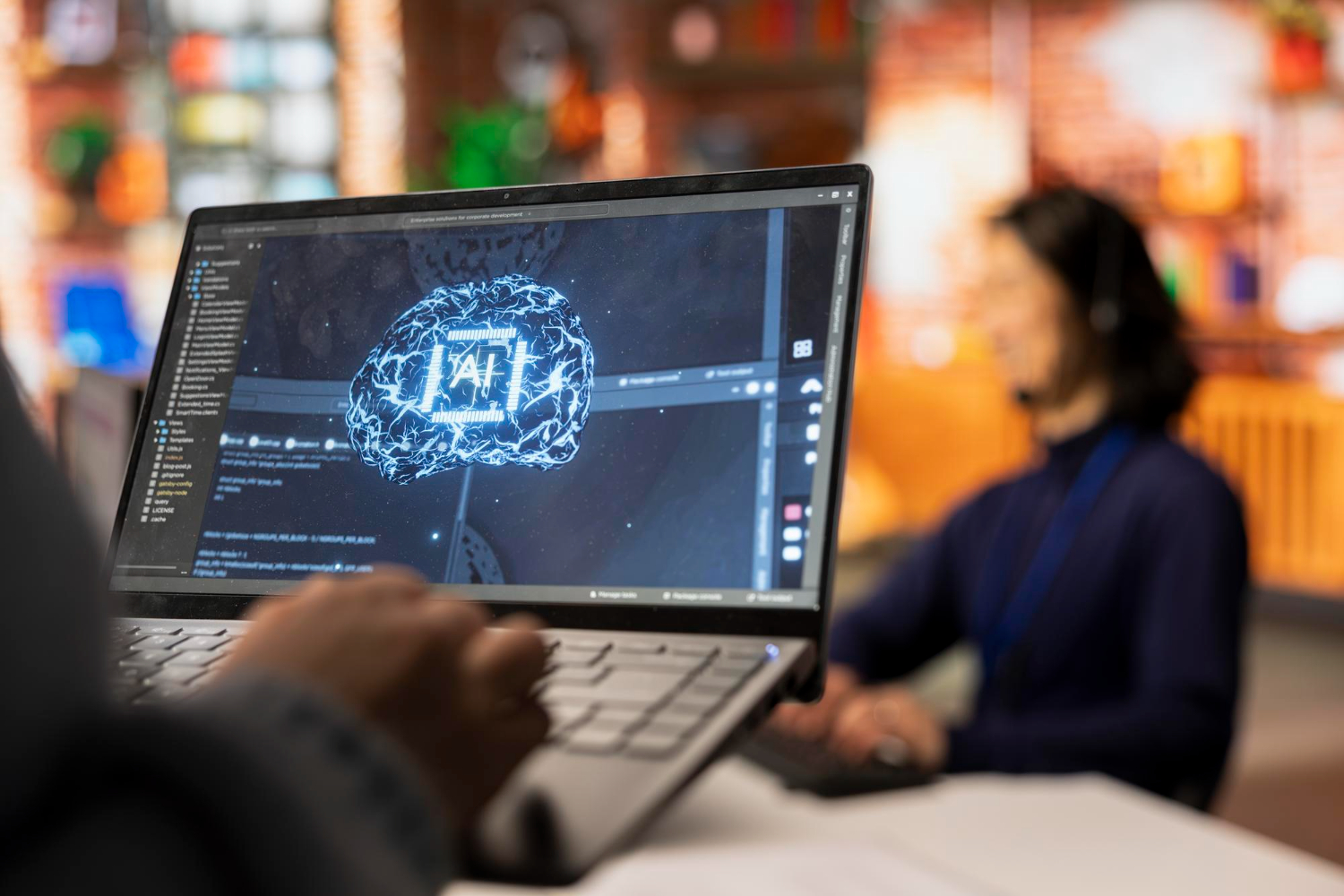
Prompting in AI is the practice of giving clear, specific instructions to guide the AI’s behavior and responses. Think of it as training an employee—the more precise your instructions, the better their performance. Understanding prompting in AI is essential for maximizing the value of your samp AI assistant for small businesses.
Poor prompt: “Handle customer calls.”
Effective prompt: “Answer customer calls between 9 AM and 9 PM. Greet callers warmly, ask how you can help, answer questions about our products, store hours, and return policy using our knowledge base, schedule appointments by checking calendar availability, and transfer calls to me for custom orders or complaints.”
Best Prompting Practices for Small Businesses
Be Specific About Scenarios: Don’t just tell the bot what to do; describe when and how to do it. Mastering prompting in AI requires including examples of actual customer conversations, outlining step-by-step processes for common tasks, and specifying when to escalate to a human.
Use Simple, Direct Language: Avoid jargon and complexity. Write prompts as if explaining the task to a smart but inexperienced employee. Break complex workflows into clear sequential steps. Effective prompting in AI relies on clarity over complexity.
Provide Context and Examples: The most effective prompting in AI includes sample dialogues. For instance, instead of saying “be friendly,” show the bot: “Customer: ‘Do you have this in blue?’ Bot: ‘Great question! Let me check our inventory for you in blue. I see we have that available in medium and large. Would either of those work for you?'”
Iterate Based on Real Interactions: Review call logs regularly and refine prompts when you notice the bot struggling with specific questions or providing suboptimal responses. Most AI systems allow you to update and improve prompts without technical expertise. This iterative approach to prompting in AI ensures continuous improvement.
Using AI Voice Bots for Marketing
How to Create a Marketing Strategy for a Small Business with AI
Understanding how to create a marketing strategy for a small business becomes significantly easier when AI voice bots are part of your toolkit. These systems transform raw customer interactions into actionable marketing intelligence.
Customer Data Collection and Analysis: Every conversation provides valuable data. An AI voice bot can ask brief survey questions after resolving inquiries, capture demographic information naturally during conversations, track which products or services generate the most interest, and identify common objections or concerns that your marketing should address.
Lisa owns a yoga studio and configured her samp AI assistant for small businesses to ask new callers, “How did you hear about us?” The data revealed that 60% found her through Instagram, 25% through Google search, and 15% from referrals. When learning how to create a marketing strategy for a small business, this type of data is gold. She reallocated her marketing budget accordingly, doubling down on Instagram content and improving her Google business profile, which increased new member sign-ups by 45% over six months.
Building Customer Personas: The conversations captured by your AI voice bot reveal patterns that help you understand your ideal customer. When figuring out how to create a marketing strategy for a small business, knowing exactly who you’re targeting—their pain points, preferences, and purchasing behaviors—makes every marketing dollar more effective.
Voice Bots in Lead Generation and Follow-Ups
Automated Outbound Calling: AI voice bots can make outbound calls to leads, following up on inquiries, confirming interest before scheduling sales calls, re-engaging dormant customers with special offers, and conducting satisfaction surveys. This capability is crucial when determining how to create a marketing strategy for a small business with limited staff.
A real estate agent named David uses his AI voice bot to call leads from online property searches. The bot qualifies prospects by asking about their timeline, budget, preferred neighborhoods, and whether they’re pre-approved for financing. Serious buyers are immediately scheduled for property viewings with David, while others are added to a nurture campaign. This system allows David to focus his time on qualified buyers rather than making dozens of cold calls daily.
Personalized Follow-Up Sequences: The bot can initiate multi-touch campaigns, sending text reminders after calls, following up with customers who showed interest but didn’t commit, and re-engaging past customers at optimal intervals. This automated yet personalized approach is a key component when learning how to create a marketing strategy for a small business that actually converts.
Supporting SBA Business Expansion with AI
Scaling Operations Without Hiring More Staff
One of the biggest challenges in sba business expansion is maintaining service quality while growing. AI voice bots provide a solution that supports sba business expansion principles without proportionally increasing overhead. The SBA emphasizes smart growth strategies, and technology adoption is consistently highlighted as a key factor in successful sba business expansion.
Case Study: Scaling a Home Services Business: Tom operates a plumbing business that grew from two trucks to eight trucks over 18 months—a textbook example of sba business expansion. With traditional staffing, he would have needed to hire multiple office staff to handle the increased call volume. Instead, he implemented a samp AI assistant for small businesses that manages all incoming service requests, emergency calls, scheduling, and customer updates.
The bot triages calls based on urgency, immediately dispatches plumbers for emergencies, schedules routine appointments, and sends customers real-time updates about technician arrival times. Tom’s office staff remained at two people, but his business now handles four times the call volume. The cost savings allowed him to invest in additional vehicles and hire more skilled technicians rather than administrative personnel—exactly the type of efficiency the SBA recommends for sustainable sba business expansion.
AI Insights for Growth Planning
AI voice bots generate data that informs strategic decisions critical to sba business expansion. By analyzing call patterns, you can identify which services customers request most frequently, determine optimal staffing levels for different times and seasons, discover geographic areas with high demand that might warrant expansion, and recognize emerging customer needs before competitors do.

This intelligence aligns perfectly with SBA guidance on sba business expansion, which emphasizes data-driven decision-making and measured growth strategies rather than intuition-based expansion.
Strengthening Operations with the SBA Business Resilience Guide
Preparing for Disruptions Using AI
The sba business resilience guide emphasizes preparation for unexpected disruptions. AI voice bots are a critical component of business continuity planning recommended in the sba business resilience guide.
Maintaining Operations During Emergencies: When physical offices close due to weather, health crises, or other emergencies, an AI voice bot ensures customers can still reach your business—a key principle outlined in the sba business resilience guide. It can provide updates about closures or delays, reschedule appointments automatically, answer urgent questions, and collect contact information for follow-up once operations resume.
During the 2024 winter storms in the Northeast, a small accounting firm used their samp AI assistant for small businesses to handle hundreds of calls from clients worried about tax deadline impacts. The bot provided accurate information about IRS extensions, rescheduled appointments, and collected questions for follow-up, allowing the small team to work remotely without missing a beat. This exemplifies the communication continuity emphasized in the sba business resilience guide.
Maintaining Customer Trust During Uncertainty
Consistent communication builds trust, especially during challenging times—a core tenet of the sba business resilience guide. An AI voice bot ensures customers always receive timely, accurate information rather than encountering busy signals, full voicemail boxes, or unanswered calls—all of which erode confidence and drive customers to competitors.
The sba business resilience guide stresses that businesses which maintain strong customer relationships during disruptions recover faster and emerge stronger. AI voice bots provide the reliable communication infrastructure that makes this possible.
AI Voice Bots and Financial Operations
Managing Small Business Financial Reports
Financial management is critical but time-consuming. AI voice assistants can streamline various financial tasks and provide valuable business management help with small business financial reports.
Transaction Summaries and Expense Tracking: Some advanced AI systems integrate with accounting software to provide voice-activated financial summaries. A business owner can ask, “What were my total sales last week?” or “How much did I spend on supplies this month?” and receive immediate answers without logging into multiple systems or manually compiling small business financial reports.
Automated Financial Reporting: AI tools can compile data from various sources and generate regular small business financial reports, create alerts when spending exceeds budgets, track outstanding invoices and upcoming payments, and identify trends in revenue and expenses. This automation transforms how owners interact with their small business financial reports, making financial data accessible and actionable rather than buried in spreadsheets.
Mike, who owns a construction company, uses his samp AI assistant for small businesses integrated with QuickBooks to generate weekly small business financial reports. Every Monday morning, he receives a voice summary of the previous week’s revenue, outstanding invoices, and major expenses. This five-minute briefing replaced what used to be a two-hour manual review of small business financial reports, giving him more time for job site visits and client meetings.
Financial Accounting for Small Business Made Easier
Invoice and Payment Reminders: An AI voice bot can call customers with overdue invoices, send polite payment reminders via voice and text, and update records when customers commit to payment dates. This improves cash flow without the awkwardness of personal collection calls—essential business management help for financial accounting for small business operations.
Rachel owns a graphic design business and previously struggled with late payments that hurt her financial accounting for small business cash flow. Her AI voice bot now calls clients three days before invoices are due with a friendly reminder, then follows up on overdue accounts. Her average payment time decreased from 45 days to 28 days, dramatically improving her working capital and simplifying her financial accounting for small business processes.
Expense Categorization and Tracking: Modern AI systems can help with financial accounting for small business by listening to voice notes about expenses and automatically categorizing them in your accounting system. A contractor can say, “I spent $347 on lumber for the Johnson project today,” and the AI logs it correctly, maintaining accurate records for financial accounting for small business tax purposes.
Payroll and Tax Reminders: The AI assistant can provide business management help by reminding you about payroll deadlines, estimated tax payments, and other critical financial accounting for small business dates, ensuring you never miss important obligations that could result in penalties.
Real-Life Examples of AI Voice Bot Use
Retail and E-commerce
Order Status and Returns: Online retailers use AI voice bots to handle the most common customer inquiries. When customers call asking “Where’s my order?” the bot accesses the shipping system, provides tracking information, and sends a text with the tracking link.
A small online apparel company implemented a samp AI assistant for small businesses that handles returns and exchanges. The bot verifies purchase information, emails return labels, and processes refund or exchange requests. This automated system handles 85% of return requests without human involvement, saving approximately 25 hours weekly—time the owner now spends developing new product lines and learning how to create a marketing strategy for a small business that drives repeat purchases.
Service-Based Businesses
Salons and Personal Services: Hair salons, spas, and similar businesses rely heavily on appointment scheduling. An AI voice bot can manage the entire booking process, including suggesting available time slots, sending confirmation and reminder texts, handling cancellations and rescheduling, and even offering to book recurring appointments.
One salon owner reported that her no-show rate dropped from 18% to 6% after implementing an AI voice bot that sends automated reminders 24 hours before appointments and calls clients who don’t confirm to verify their booking. This improvement in operational efficiency provided crucial business management help that increased monthly revenue by $3,200.
Consulting and Professional Services: Consultants use AI voice bots to qualify leads before spending time on discovery calls, schedule initial consultations, send pre-meeting questionnaires, and follow up with proposals and contracts. When determining how to create a marketing strategy for a small business in the consulting space, automating these touchpoints ensures no potential client falls through the cracks.
Healthcare and Wellness
Patient Scheduling and Reminders: Medical and dental practices, physical therapy clinics, and mental health providers use samp AI assistant for small businesses solutions to streamline patient communication while maintaining HIPAA compliance through secure systems.
A physical therapy clinic reduced administrative costs by 40% after implementing an AI voice bot that handles appointment scheduling, insurance verification pre-calls, and post-treatment follow-ups to check patient progress. The system also helps manage small business financial reports by tracking appointment attendance rates and identifying patterns that impact revenue.
Common Challenges and How to Overcome Them
Cost Concerns
Many small business owners assume AI is expensive technology reserved for large corporations. In reality, AI voice bot solutions now offer flexible pricing models accessible to businesses of all sizes, supporting affordable sba business expansion.
ROI Calculation: Calculate the true cost of your time. If you spend 10 hours weekly on tasks an AI voice bot could handle, and your effective hourly rate is $50 (considering what you could earn doing revenue-generating work), that’s $500 weekly or $26,000 annually. Most samp AI assistant for small businesses solutions cost $1,200-$3,600 annually, creating a positive ROI of $22,000-$25,000.
Start Small and Scale: Many providers offer tiered pricing. Start with basic features for routine calls and expand capabilities as you see results and identify additional use cases. This measured approach aligns with sba business expansion best practices.
Data Privacy and Security
Customers rightly worry about how their information is handled, and businesses must protect sensitive data—a concern addressed in the sba business resilience guide.
Choosing Reputable Providers: Select AI voice bot providers that offer end-to-end encryption for all communications, compliance with regulations like GDPR, CCPA, and HIPAA where applicable, clear data retention and deletion policies, and regular security audits and updates. These security measures align with recommendations in the sba business resilience guide for protecting business assets.
Transparent Communication: Inform customers when they’re speaking with an AI bot (many actually prefer it for routine tasks) and explain how their data is protected and used. This transparency builds the trust emphasized in the sba business resilience guide.
Technical Integration Challenges
Concern about technical complexity prevents some business owners from adopting AI voice bots, even when they understand how to create a marketing strategy for a small business that includes automation.
No-Code Solutions: Modern samp AI assistant for small businesses platforms offer drag-and-drop interfaces that require no programming knowledge, pre-built templates for common business scenarios, integration wizards that connect to popular business tools, and simple prompting in AI interfaces that use plain language.
Implementation Support: Most providers offer onboarding assistance, training resources, ongoing technical support to ensure smooth operation, and guidance on prompting in AI best practices for your specific industry.
Choosing the Right AI Voice Bot
Features to Look For
Natural Language Understanding (NLU): The system should comprehend conversational language, not just keywords, handle accents and speech variations, understand context from previous exchanges, and recognize when it’s confused and needs clarification. Strong NLU capabilities make prompting in AI more intuitive and effective.
CRM Integration: Seamless connection with tools like Salesforce, HubSpot, Zoho, or other CRM systems you use ensures all customer interactions are logged and accessible. This integration is crucial for generating accurate small business financial reports and supporting effective financial accounting for small business operations.
Custom Workflows: The ability to create unique conversation paths tailored to your specific business needs, including conditional logic (if a customer says X, then do Y), multi-step processes, and handoff protocols to human team members. Understanding prompting in AI allows you to configure these workflows without technical expertise.
Analytics and Reporting: Comprehensive dashboards showing call volume and patterns, most common questions and requests, resolution rates and customer satisfaction, conversion metrics for sales-related calls, and data that feeds into your small business financial reports. This business management help through analytics is invaluable.
Omnichannel Capabilities: The best samp AI assistant for small businesses systems handle phone calls, text/SMS messages, web chat, and social media messaging from a unified platform.
Integration with Existing Tools
Your AI voice bot should work with your current technology stack, not replace it. Look for compatibility with your scheduling software (Calendly, Acuity, Google Calendar), payment processors (Square, Stripe, PayPal), communication platforms (Slack, Microsoft Teams), e-commerce systems (Shopify, WooCommerce), and accounting software (QuickBooks, FreshBooks, Xero) for seamless financial accounting for small business operations and small business financial reports generation.
The Future of AI Voice Bots for Small Businesses
Trends to Watch
Emotional Intelligence: Next-generation AI voice bots will better detect customer emotions through voice tone and adjust responses accordingly, providing empathetic responses to frustrated customers and celebrating with excited callers. This advancement will make prompting in AI even more nuanced and effective.
Multilingual Capabilities: Real-time language translation will allow small businesses to serve diverse customer bases without hiring multilingual staff—a powerful advantage for sba business expansion into new markets.
Predictive Analytics: AI systems will anticipate customer needs based on historical patterns and proactively reach out with relevant offers or information. This predictive capability will revolutionize how to create a marketing strategy for a small business by enabling truly personalized, timely outreach.
Deeper Integration: Expect samp AI assistant for small businesses solutions to connect with an expanding ecosystem of business tools, creating fully automated workflows across your entire operation—from customer acquisition through financial accounting for small business and small business financial reports.
Long-Term Competitive Advantages
Early adopters of AI voice bot technology are establishing significant competitive advantages including exceptional customer service that larger competitors struggle to match, operational efficiency that allows competitive pricing while maintaining profitability, data-driven insights that inform better strategic decisions about sba business expansion, and resilience that aligns with sba business resilience guide principles, ensuring they weather disruptions better than competitors.
Small businesses that embrace samp AI assistant for small businesses solutions now will build expertise and optimization that compounds over time, creating barriers to entry for competitors trying to catch up later. Understanding prompting in AI and knowing how to create a marketing strategy for a small business that leverages these tools will become essential skills for entrepreneurial success.
Conclusion
AI voice bots represent a fundamental shift in how small businesses operate. They’re no longer futuristic technology or luxury tools for large enterprises—they’re practical, affordable solutions that deliver immediate value and essential business management help.
From customer support and appointment scheduling to marketing automation, financial accounting for small business operations, and generating small business financial reports, these tools save time, reduce stress, and support sustainable growth. Mastering prompting in AI, understanding how to create a marketing strategy for a small business that incorporates automation, following sba business expansion best practices, and adhering to the sba business resilience guide all become easier with the right samp AI assistant for small businesses.
For small business owners juggling multiple roles, AI voice bots act like reliable partners, handling routine work so you can focus on what truly matters: growing your business, serving customers better, and achieving your entrepreneurial goals.
The question isn’t whether AI voice bots will transform small business operations—they already are. The question is whether you’ll be among the businesses that benefit from early adoption or those playing catch-up later.
FAQs
1. Are AI voice bots suitable for very small businesses or solo entrepreneurs?
Absolutely. Solo entrepreneurs often benefit most because they have no staff to delegate to. A samp AI assistant for small businesses effectively gives you a virtual team member who handles routine tasks while you focus on your core expertise and revenue-generating activities. This supports manageable sba business expansion even for microbusinesses. Many solutions offer entry-level pricing specifically designed for the smallest operations.
2. Do AI voice bots replace human employees?
No, they complement and support human teams rather than replacing them. AI voice bots excel at repetitive, high-volume tasks but lack human judgment, creativity, and emotional intelligence for complex situations. They free your team to focus on work that truly requires human skills—complex problem-solving, relationship building, strategic thinking like how to create a marketing strategy for a small business, and creative tasks. This provides crucial business management help without eliminating jobs.
3. Is prompting in AI difficult to learn?
Not at all. If you can train an employee, you can configure an AI voice bot. Prompting in AI uses conversational interfaces where you describe what you want in plain language. Most samp AI assistant for small businesses platforms offer templates and examples to get started, and you refine prompts based on real interactions. The learning curve for prompting in AI is minimal, and most business owners become proficient within days. Think of prompting in AI as giving clear instructions rather than programming.
4. Can AI voice bots help with compliance and reporting?
Yes, they can assist significantly by organizing data systematically, creating audit trails of all interactions, sending reminders for compliance deadlines, and generating small business financial reports from collected data. They support financial accounting for small business by maintaining accurate records. However, they should complement rather than replace professional advice from accountants, lawyers, or compliance specialists. Use samp AI assistant for small businesses to streamline the administrative aspects while relying on professionals for interpretation and strategy.
5. How quickly can a business see results from AI voice bots?
Most businesses notice improved efficiency and response times within the first few weeks. Quantifiable benefits like reduced missed calls, more booked appointments, and time savings typically become evident within the first month. ROI usually becomes clear within 2-3 months as you refine your prompting in AI and expand use cases. The technology delivers quick wins while providing compounding benefits over time as it learns from interactions and you discover additional applications—from improving how to create a marketing strategy for a small business to streamlining financial accounting for small business processes and supporting sba business expansion goals aligned with the sba business resilience guide.